https://www.citizen.co.za/news/south-africa/how-much-coj-customers-fined-level-1-water-restrictions/
Tanker mafia causing chaos in South Africa – Daily Investor
Water crisis — Joburg skirts Day Zero for fourth time in a year
Durban to face water rationing for the next 12 months and maybe more

South Africans warned to brace for 6-month water shutdown
Billions down the big-city revenue drain as 40% of South Africa’s purified water supply is lost to pipe leaks
Municipal backup and Rain Water Harvesting
I often find that when visiting a client to quote they are not quite sure of what system will best serve their needs. There are various systems that one can install and you need to ensure that it is the most suitable for your needs, and that it can be built on, plug and play style, without having to re-design it at additional cost.

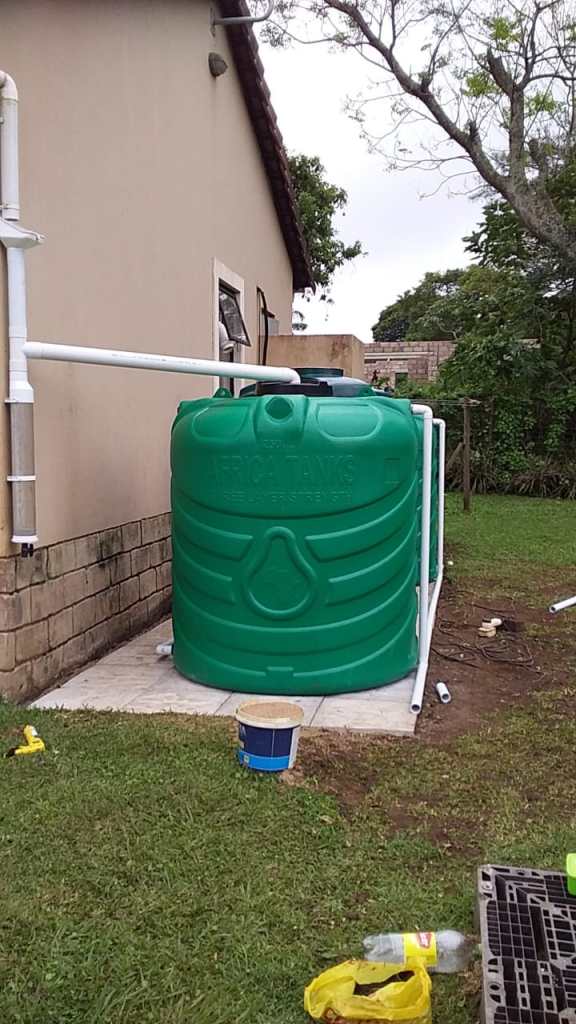


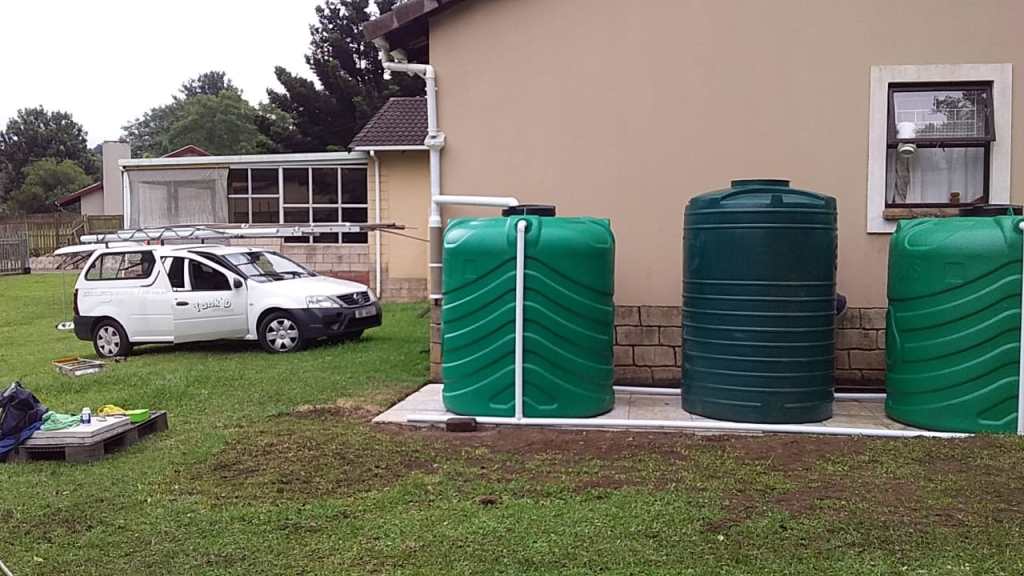


Municipal Backup refers to a tank or reservoir of water that fills up with municipal water and is available to use in the event the municipality stops delivering water. Provided there is a slight trickle of water coming from the municipality, the tank will continue to fill and the float valve will only switch off once it is full. Whenever mains water pressure drops to below 1.5 bar, the pump will take over and deliver water from the tank whilst the tank continues to re-fill. If however the mains supply is off for longer than it takes to finish your water, then you will run out. One can then either double up the capacity of tanks or introduce rain water harvesting. This system doesn’t necessarily require filters as it is the same water you were using before you put the tank in place. It should be cycled at least every two weeks though to keep it fresh. Simply use half of it and allow it to fill with fresh water (if it’s available).
Rain water harvesting is of course exactly that, harvesting of rain water and storage of it in a tank. It is normally harvested from the roof and diverted to the tank after passing through a few filters or screens to remove as much of the larger dirt as possible. The water can however contain pathogens such as bacteria and viruses and should therefore be passed through the appropriate filters and sterilizers before it can be consumed. A standard 20 inch, 3 stage Big Blue with 2 sediment filters and one charcoal activated carbon filter will remove solids and various chemicals such as chlorine and fluoride. However, if there is no rain your tanks will remain empty. The solution? Combine the two methods.
An Integrated System is a combination of both of the above. By moving the float valve, in the municipal system, to half way down the tank, we create a backup of half our tank and a capacity to harvest rainwater in the other half. When the system is switched on the tank fills half way with municipal water and the float valve switches off. This is our backup in the event the main supply is interrupted. It then rains and the tank fills to the top, after which it overflows through a dedicated overflow pipe to waste (or the pool). We use the water and hopefully before it reaches half way, our backup, it rains again and fills the tank. We are now off grid and using only rain water. Our municipal meter does not turn. When the rainy seasons ends the tank will drop to half and we will again start using municipal water with half our tank as a backup. Unless, in Durban, a cold front comes along and fills us up again.
In Durban, with the right roof area being harvested, one can live off grid and use only rain water during the summer months
For a free no obligation quote please contact me, Garrick Dunstan, on 082 496 5444, garrick@venuepages.co.za, or use the contact us form below


 Tank'D